[Guest post – Max on the Move]
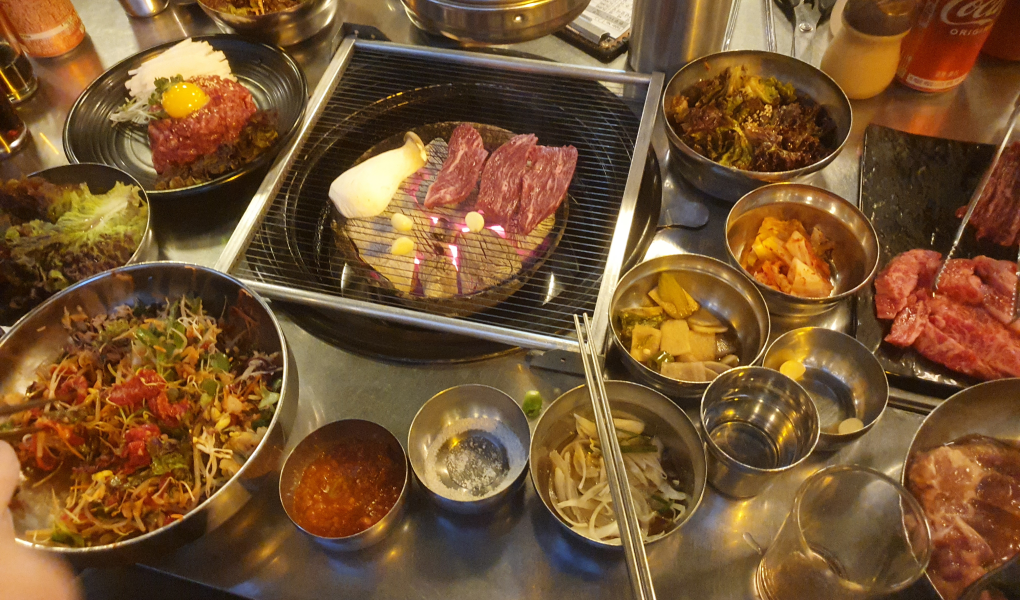
The first time I sat down in a Korean restaurant in Seoul, the table filled up with little bowls I had not ordered, the waiter switched on a grill in the middle of the table, and I had no idea whether I was supposed to eat the side dishes first, cook the meat myself or wait for someone to tell me. I worked it out, eventually, mostly by watching the table next to me.
I lived in Sinchon for eight months as an exchange student at Ewha Womans University, and I have gone back to Seoul every year since, these days with my wife. Everything I have learned about the city over those visits is in my Seoul insider guide. This is not a list of restaurants. Seoul’s food scene changes so fast that half of any restaurant list is out of date within a year. Instead, here are the things that actually make eating in Seoul easier and more fun: how the table works, how to read a menu, and which dishes to look for in which situation.
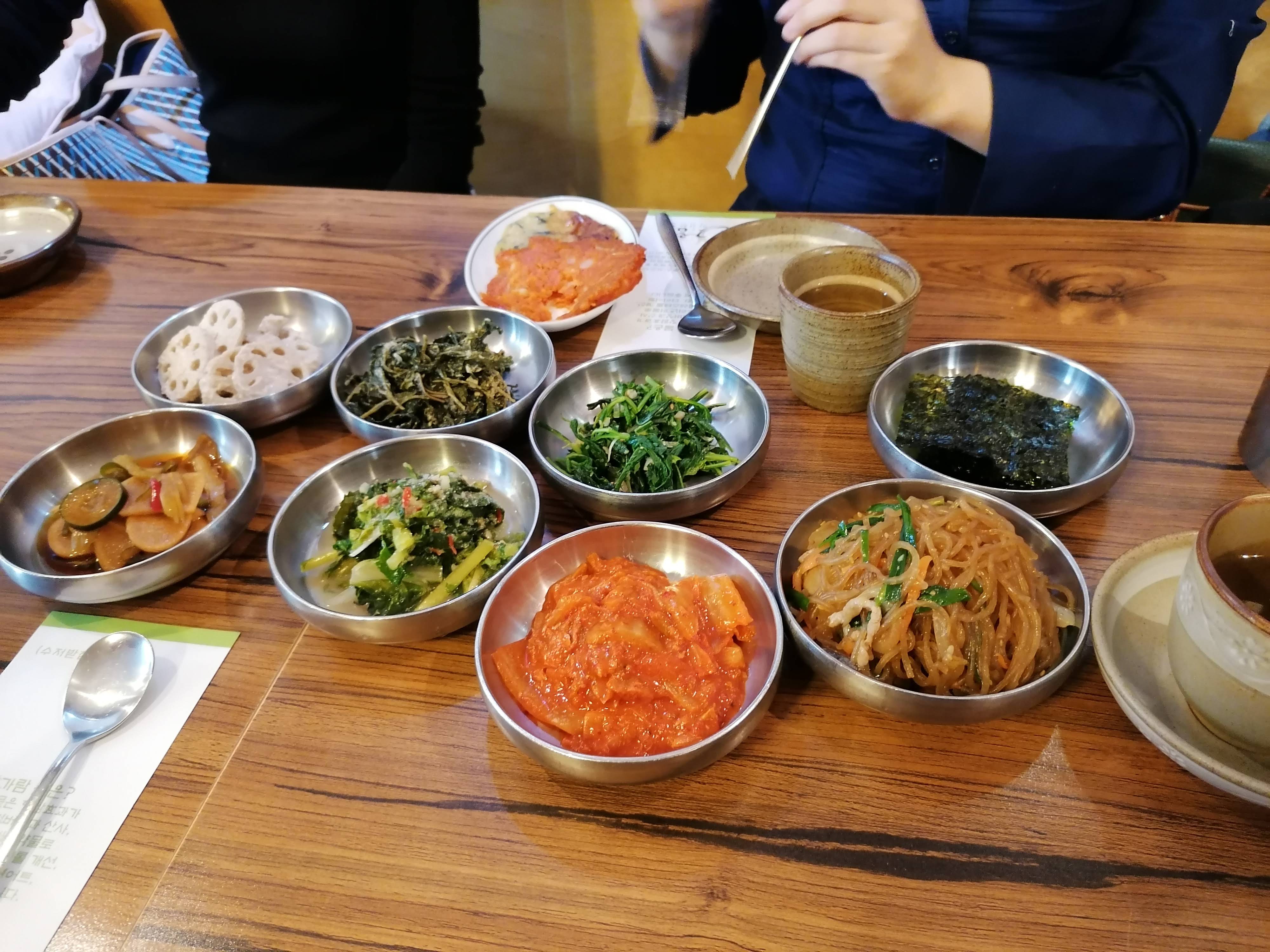
1. The side dishes are free, and they are not a starter
Those small bowls that arrive before your food are banchan. Kimchi is almost always one of them, along with seasoned greens, pickles, glass noodles or braised vegetables. They come with the meal at no extra cost, and most restaurants refill them if you ask.
What took me a while to understand: banchan are not something to finish before the main dish arrives. They are eaten together with your rice and the main course, a little of everything, shared by the whole table.
2. Many meals are built for two or more
Korean eating is social, and menus reflect that. At a barbecue restaurant, many places expect at least two portions of meat. A fried chicken order is often a whole chicken, and stews can come in a pot for the table. If you are travelling solo, check the minimum order before you sit down, and look out for places that serve one person meals like gimbap, rice bowls or noodle soups.
As a couple, this works in your favour. My wife and I usually order two different dishes and share both, which is how most Korean tables work anyway.
3. The name of the dish tells you how spicy it is
Korean food has a reputation for being fiery, but that is only half true. A handful of words on the menu will tell you a lot before you order:
| Menu word | What it means | Spice level |
|---|---|---|
| Jjigae (찌개) | Thick stew, often with kimchi or chilli paste | Usually spicy |
| Guk / Tang (국 / 탕) | Soup, often a clear broth | Usually mild |
| Gui (구이) | Grilled | Usually mild |
| Jjim (찜) | Steamed or braised | Often mild |
| Bokkeum (볶음) | Stir fried | Varies, ask |
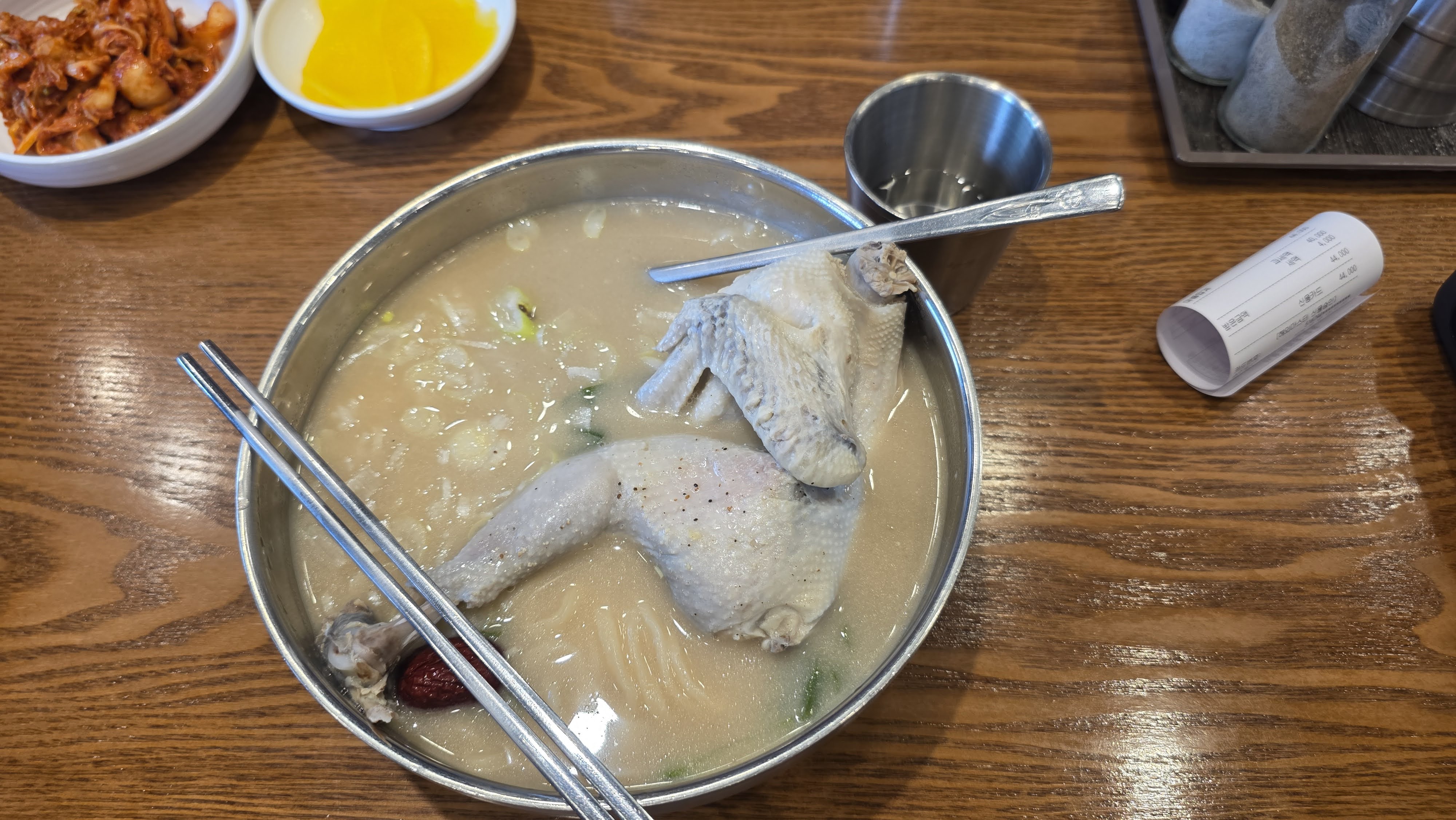
So kimchi jjigae will make you sweat, while samgyetang, a whole small chicken cooked with ginseng and rice, is gentle and comforting. Samgyetang is my favourite Korean soup, and it is exactly what I order after a few days of red sauces.
4. At barbecue, you are the chef (and the wrap maker)
At a Korean BBQ restaurant the grill sits in the middle of your table. Depending on the place, you cook the meat yourself or the staff come over and help. Samgyeopsal, thick slices of pork belly, is the classic and what we order most often.
The best part is the wrap. Take a lettuce leaf, add a piece of meat, a dab of ssamjang (a savoury dipping paste) and anything else from the banchan that looks good, then fold it up and eat it in one bite. Every person at the table ends up with a slightly different favourite combination.
5. Fried chicken and beer is a ritual, not a snack
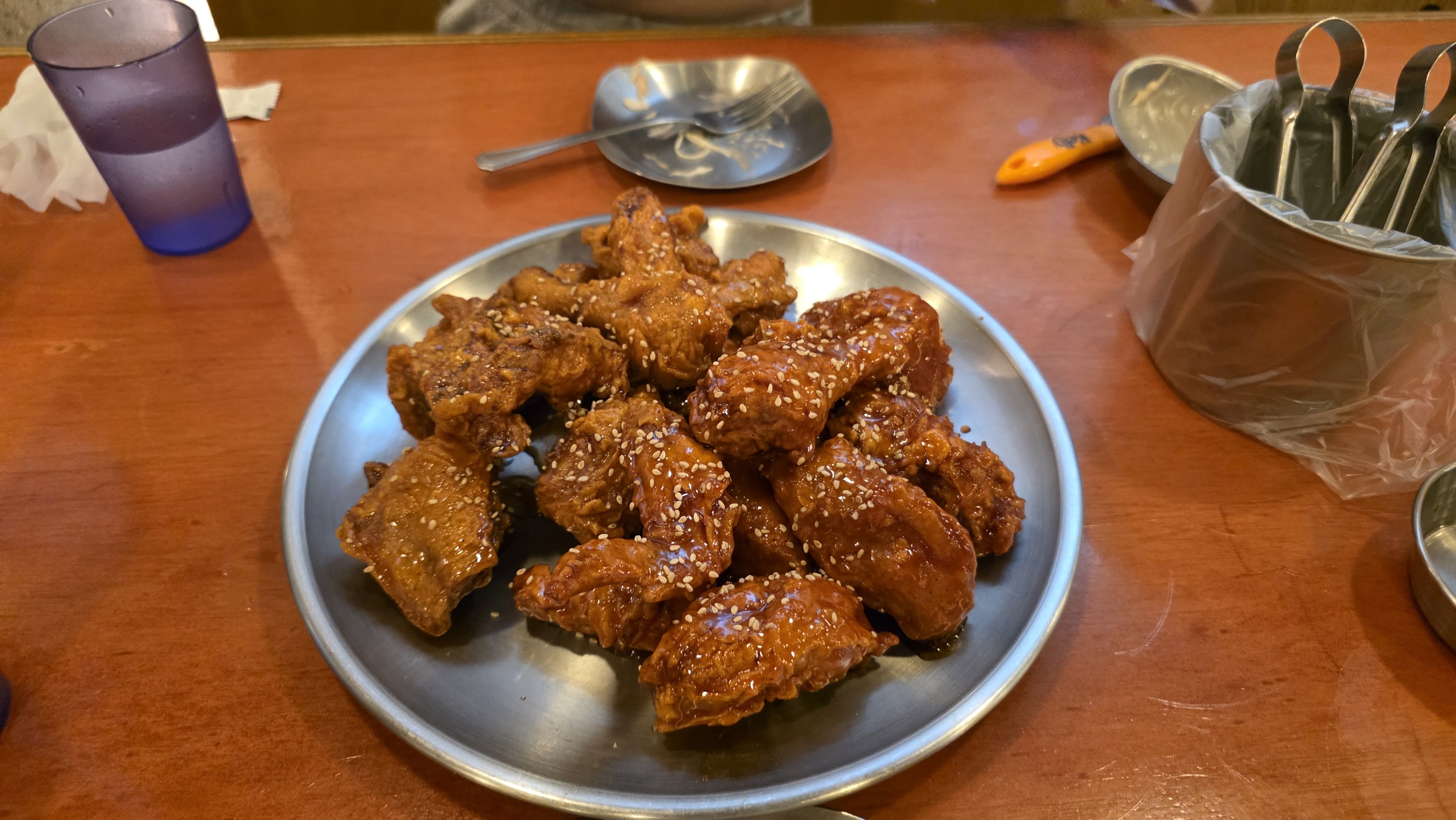
Chimaek, from chicken and maekju (beer), is how a lot of evenings in Seoul end. Korean fried chicken is extremely crispy, and my favourite is yangnyeom, a sticky sweet and spicy glaze. If you cannot decide, order half with sauce and half without. A whole chicken is easy to share between two, with a cold beer each.
6. “Hangover soup” is a whole category
Haejangguk translates as hangover soup, and you do not need a hangover to enjoy it. There is no single recipe: depending on the restaurant it can contain meat, bones, vegetables or congealed blood, so check what is in it rather than ordering by the English name. Search for 해장국 in a map app and look at the menu photos.
The same goes for sundae, often described as Korean black pudding. As a Swiss person I grew up with black pudding at home, but the Korean version is different, as many types are filled with glass noodles. If you are curious, order a small plate to share first.
7. Some of the best food in Seoul is not Korean at all
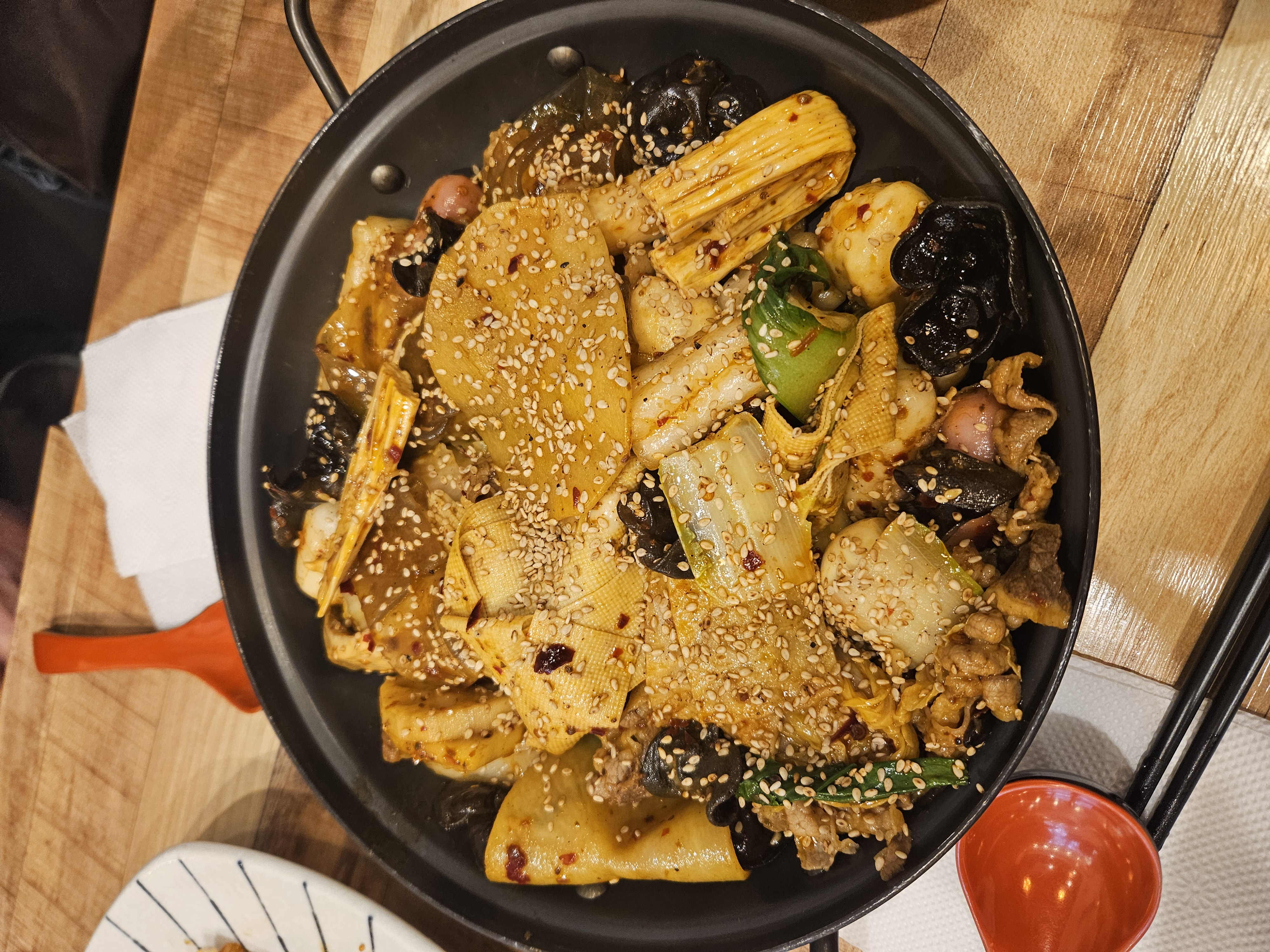
This surprised me most. In student areas like Sinchon, the dish everyone eats is mala, the numbing, spicy Sichuan stir fry from China. With mala xiang guo you fill a bowl from a buffet of vegetables, tofu, mushrooms, noodles and meat, pay by weight, and the kitchen stir fries it with the spice paste. Malatang is the soup version.
I ate it at least once a week while I lived in Sinchon, and lotus root was always my favourite ingredient. Honestly, I think mala tastes better in Seoul than anywhere else I have had it. Start with a mild spice level on your first visit, because the heat builds.
8. Trust dishes, not restaurant names
Seoul is a city of trends. Restaurants open, become the place everyone talks about and close again within a year or two. When I lived in Sinchon there was a small boom in vegan restaurants. Almost all of the ones I knew have since closed.
That is why I think it is more useful to know which dishes you want than which restaurants to visit. In a fast moving neighbourhood, a place that has survived several years is almost always good, because students do not keep paying for food that is not.
9. Fish hides in places you would not expect
I was vegetarian during my eight months in Seoul. It was very doable, but I learned quickly that “no meat” does not always mean what you think. Kimchi usually contains fish sauce or salted shrimp, many soups and tteokbokki sauces start with anchovy broth, and gimbap often comes with ham, fish cake and egg.
My Korean was poor, so instead of explaining, I showed staff a short note on my phone. It worked far better. If you eat a plant based or pescatarian diet, write down “I am vegetarian” and “no meat, ham or seafood, please” in Korean before you go. My cheap favourite from that time: a gimbap made fresh to order and filled with nothing but chilli.
10. Go underground for the best food halls
Korean department stores have food halls in the basement, somewhere between a market, a deli and a food court, with ready meals and banchan to take away. The one below the Hyundai Department Store in Sinchon, the student neighbourhood I describe in my Sinchon Seoul guide, is excellent, and its supermarket has a surprisingly international range. I nearly dropped my basket when I found Emmi raclette cheese from Switzerland on the shelf.
Convenience stores like GS25, CU and 7-Eleven are open around the clock and handy for a quick gimbap or a cup of spicy instant noodles. Just do not underestimate the “2x Spicy” packs.
11. Coffee comes after every meal, and it is iced
After eating, Seoul goes to a café. Koreans drink iced americano in every season, even in sub-zero winters, and there is a slang word for it: eoljuga, short for “iced americano, even if I freeze to death”. Cafés are also places to stay. In student areas you will see people sitting for hours over one drink, and nobody will rush you.
For something different, try an ashotchu, also called Icetino: a shot of espresso poured over sweet peach iced tea. It started with students at Ewha Womans University and is now on the menus of big Korean coffee chains like Ediya.
12. Always leave room for dessert
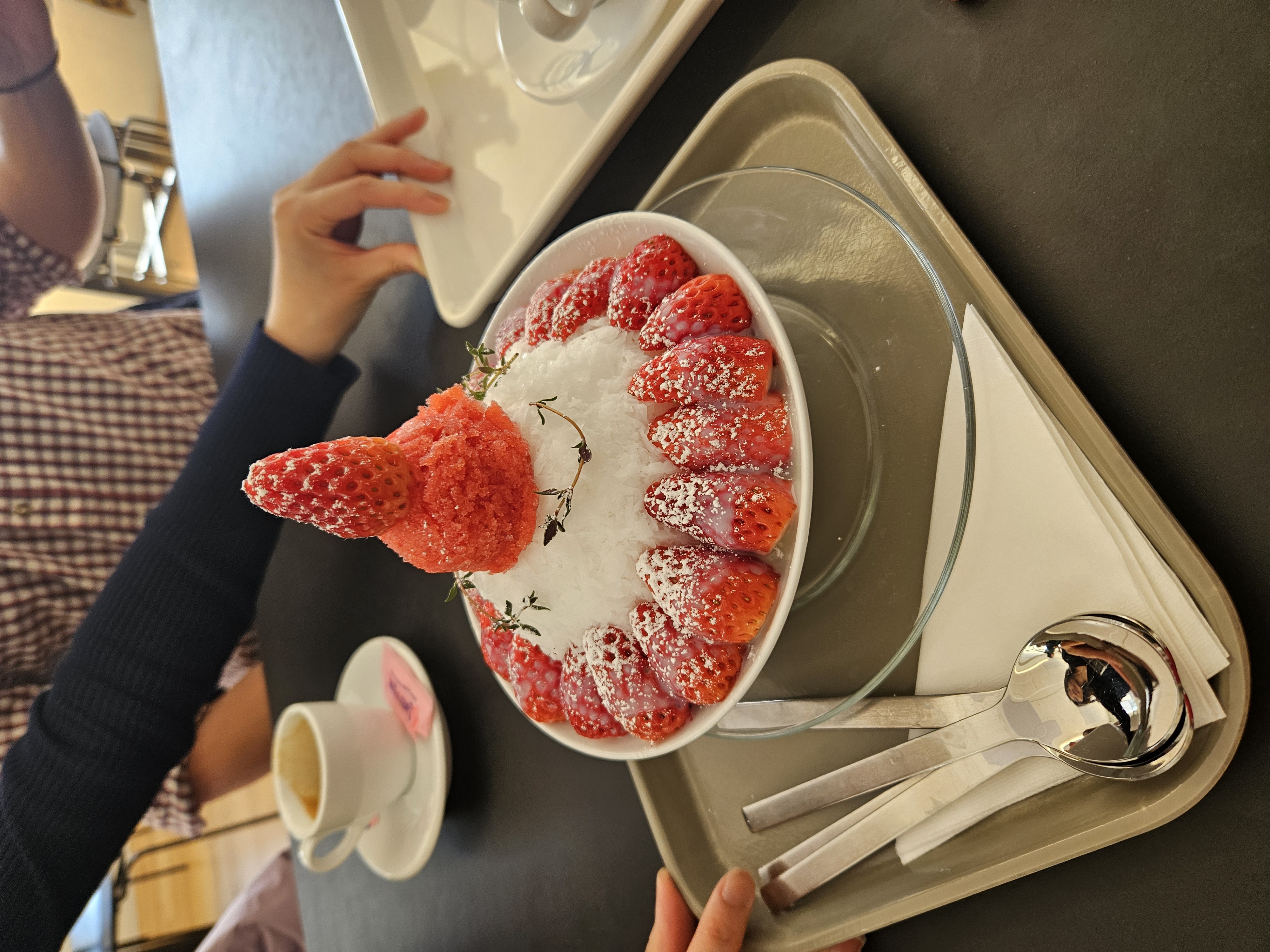
Korean meals are generous, but save a little space. Bingsu, a mountain of finely shaved milk ice with toppings, is made to be shared with several spoons. My wife and I disagree here: I would always pick chocolate, she does not like chocolate, so we end up sharing a strawberry one. Order one bowl, ask for extra spoons, and eat it from the top down instead of stirring it into slush.
In the colder months, street carts sell roasted chestnuts and sweet potatoes, and hotteok, a pan fried pancake filled with brown sugar and nuts. A warm paper bag of chestnuts on a winter evening was my favourite street snack in Seoul.
A few practical tips
- Use Papago’s camera translation on menus, and look for a language option on ordering kiosks.
- Save restaurant names in Korean. It makes finding them on Naver Map or KakaoMap much easier.
- Check how prices work. Barbecue is often priced per portion, mala by weight. Ask before you order.
- Check opening hours and last orders before crossing the city for one particular place.
- Share, and order in rounds. Start with less, add more. It leaves room for a second stop.
- For the full list of Korean dishes, with their names in Korean, where they come from and how spicy they are, see my Korean food guide.
Seoul rewards curious eaters. Sit down, let the banchan arrive, watch what the table next to you is doing, and order something you cannot pronounce yet. That is how I learned, and I still learn something new every time I go back.
About the Author
Max is a Swiss travel writer who lived in Sinchon, Seoul, for eight months while studying at Ewha Womans University, and later spent three years in Tokyo. He returns to Korea every year and writes about Seoul, Busan, Japan and Switzerland on Max on the Move. All photos in this article are his own. Find him on Instagram.


